
Paris (Imran Y. CHOUDHRY) :- Former Press Secretary to the President, Former Press Minister to the Embassy of Pakistan to France, Former MD, SRBC Mr. Qamar Bashir analysis : Human civilization has always been built around struggle. People have labored to secure food, shelter and safety. They have pursued education, endured hardship and developed skills not only to survive, but also to gain dignity, recognition and self-actualization. Alongside this material journey has run a spiritual one: the search for meaning and purpose beyond physical comfort. For most people, however, earning a livelihood has consumed the greater part of life.
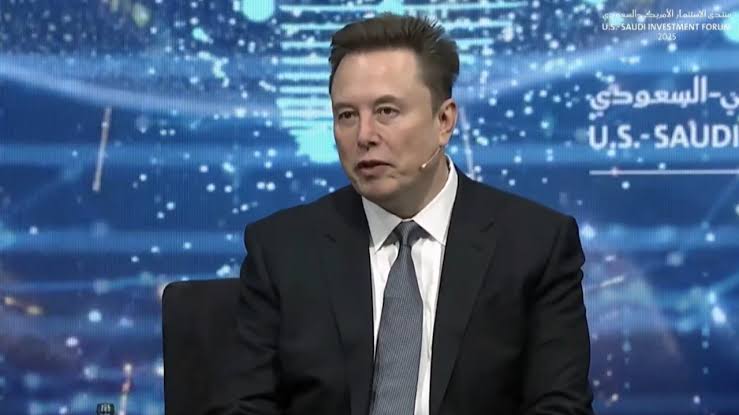
Elon Musk now asks us to imagine a radical departure from that history. In a recent conversation with Joe Rogan, he described a “benign scenario” in which artificial intelligence and robotics generate sustainable abundance and a “universal high income.” Work would become optional, poverty could disappear, and every person could have access to excellent medical care and virtually all desired goods and services. Rogan called it an ideal socialist utopia—ironically produced not by a workers’ revolution, but by advanced capitalist technology.
The idea sounds extraordinary, yet its underlying logic is simple. If intelligent machines can perform most physical and cognitive tasks faster, more accurately and at lower cost than human beings, the productive capacity of the economy could expand enormously. Humanoid robots could work in factories, construct roads and buildings, handle cargo at ports, cultivate farms, drive vehicles, maintain infrastructure and perform dangerous jobs without fatigue. AI systems could manage offices, logistics, design, accounting and countless other digital operations.
Musk has argued that highly productive robots could multiply economic output many times over. Operating around the clock, they could produce more food, housing, medicine and consumer goods at lower cost. Human beings would no longer need to exhaust themselves merely to put food on the table. A singer could devote life to music, a researcher to discovery, a parent to family, and a spiritually inclined person to reflection and service. Work might continue, but as a choice rather than a condition of survival.
This is the attractive face of sustainable abundance. It could also reduce many social pressures associated with deprivation. Financial desperation contributes to theft, exploitation and some forms of violence. Safer autonomous transport could sharply reduce accidents caused by fatigue, intoxication and human error. Precision agriculture and automated supply systems could limit waste and improve food security. Competition over scarce resources, a recurring source of domestic conflict and international rivalry, might also become less intense.
But technology does not distribute its own benefits. That is the decisive weakness in every effortless version of this dream. A billion robots may produce unprecedented wealth, but who will own the robots, the AI models, the energy systems and the data on which they depend? If ownership remains concentrated among a handful of corporations and technologically dominant countries, abundance at the level of production could coexist with extreme scarcity for everyone else. Factories can overflow with goods while people remain poor if they lack income, entitlement or political power.
Universal high income, therefore, cannot arise from automation alone. It would require a new social contract governing ownership and distribution. Citizens might receive an AI dividend, hold shares in national automation funds, or gain guaranteed access to housing, healthcare, education, energy and digital services. Tax systems may have to shift from labor toward the returns generated by automated capital. Otherwise, workers could lose wages and purchasing power long before abundance becomes broad enough to rescue them.
Musk himself has warned that the transition may involve considerable trauma and disruption. Digital and office-based occupations are especially exposed because AI can already perform many computer-based tasks, while complex physical work will generally take longer to automate. The road to a post-work society may therefore pass through unemployment, anxiety and political instability. Promising eventual prosperity will not satisfy families who lose their livelihoods during the transition. Governments must prepare protections before disruption reaches its full force, not after social damage has become irreversible.
There is also the profound question of meaning. Employment is not merely a mechanism for paying bills. It provides routine, identity, community and a sense of contribution. Freedom from compulsory labor could release immense creativity, but it could also produce loneliness and purposelessness if society fails to develop new sources of belonging. Education would have to shift from preparing people for jobs toward cultivating judgment, creativity, character and civic responsibility. Human worth must no longer be measured by salary, yet neither should passive consumption become the purpose of life.
Nor would abundance automatically eliminate crime, war, government or courts. Human conflict is driven not only by material need, but also by power, ideology, fear, jealousy, identity and ambition. Even a wealthy world would need institutions to protect rights, settle disputes and prevent powerful actors from controlling technology against the public interest. AI may improve administration, but handing all authority to algorithms could create surveillance and domination rather than freedom. Human judgment, democratic accountability and law would remain essential.
The greatest danger is that the developing world may enter this new age as a customer rather than a participant. Countries such as Pakistan, India and Bangladesh, along with nations across Africa, Asia and Latin America, cannot afford to watch from the sidelines while others control the infrastructure of intelligence. They must invest urgently in education, computing capacity, reliable energy, robotics, research and local-language AI. They should also cooperate regionally, share scientific resources and negotiate international rules that prevent a permanent technological caste system between nations.
Sustainable abundance is therefore neither fantasy nor destiny. AI and robotics may make it technically possible to liberate humanity from much of its compulsory labor, but only political wisdom can make that liberation universal. The real challenge is not simply teaching machines to produce more. It is ensuring that the wealth they produce belongs, in some meaningful measure, to all humanity.
Musk’s vision of sustainable abundance should therefore be welcomed not as a fool’s dream, but as a serious and achievable direction for humanity. It comes from no ordinary dreamer, but from an innovator who has repeatedly transformed seemingly impossible ideas into working realities—from electric vehicles and autonomous mobility to reusable rockets, space exploration and Starlink’s global communications network.
His record does not guarantee that every prediction will materialize exactly as imagined, but it gives the world compelling reason to take this vision seriously. Rather than resisting it or dismissing it with competing speculation, governments, scientists and technology leaders should study what Musk has achieved, invest in their own innovators and create many more minds capable of pursuing equally audacious solutions.
If this endeavor gathers global momentum, AI, robotics and sustainable energy could help build a cleaner and more peaceful world—one with less poverty, crime, conflict and competition over scarce resources, and with greater space for creativity, family, service and spiritual growth. Humanity should not fear such a future; it should begin preparing, cooperating and innovating to make sustainable abundance a shared reality for present and coming generations.
Elon Musk’s World Without Poverty, Crime or War
Elon Musk’s World Without Poverty, Crime or War