
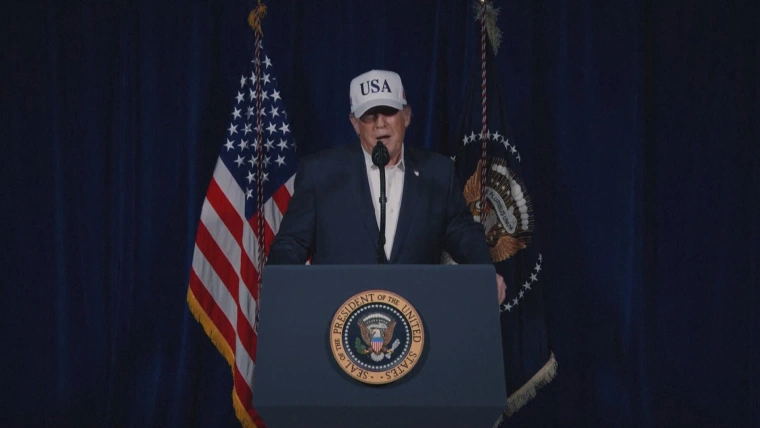
Paris (Imran Y. CHOUDHRY) :- Former Press Secretary to the President, Former Press Minister to the Embassy of Pakistan to France, Former MD, SRBC Mr. Qamar Bashir analysis : The passage of the House War Powers Resolution by a vote of 215-208 on 3rd June may ultimately be remembered as the most consequential political development of the Iran war—not because it immediately ends the conflict, but because it fundamentally alters the balance of power, the psychology of negotiations, and the strategic calculations of every actor involved.
For nearly three months, the United States approached the conflict believing that military pressure, economic sanctions, naval deployments, and the threat of further escalation would compel Iran to make concessions. Instead, the opposite appears to have happened. The war has become increasingly unpopular inside the United States, imposed significant economic costs on American households, generated uncertainty in financial markets, strained relations with allies, and exposed vulnerabilities in America’s military posture throughout the Middle East.
Against that backdrop, the House vote represents far more than a symbolic congressional gesture. It is the first clear institutional signal that domestic political support for an open-ended conflict is beginning to fracture.
The resolution, introduced by Representative Gregory Meeks of New York, directs President Donald Trump to remove U.S. armed forces from hostilities against Iran unless Congress formally authorizes military action. Although the measure does not automatically terminate the conflict and faces significant legal and political obstacles before becoming binding law, its political significance is undeniable.
Most importantly, the resolution passed despite opposition from Republican leadership and the White House. Four Republicans—Brian Fitzpatrick, Thomas Massie, Tom Barrett, and Warren Davidson—joined every Democrat in supporting the measure. This transformed what could have been dismissed as a partisan maneuver into a bipartisan warning that congressional patience with the conflict is wearing thin.
The White House immediately attempted to minimize the vote, calling it meaningless and arguing that it undermines ongoing negotiations with Iran. Republican leaders similarly argued that Congress was weakening the president’s hand at a critical diplomatic moment.
Ironically, that argument may contain the strongest evidence that the vote matters. If the resolution truly had no impact, there would be little concern about its effect on negotiations. The very fact that administration officials and congressional allies argue that it weakens American leverage implicitly acknowledges that the vote has changed perceptions of presidential authority and political support.
Before the House vote, Iran had to assume that President Trump retained broad freedom to escalate military operations if negotiations stalled. American aircraft carriers, regional bases, strategic bombers, sanctions, and military alliances all reinforced the credibility of that threat.
After the vote, Tehran sees a different picture. Iran now sees an American president facing congressional resistance, growing public opposition, rising economic pressures, and increasing questions about the sustainability of the war effort.
As a result, Iran’s negotiating position has strengthened. Iranian leaders will now conclude that time is increasingly on their side. They may calculate that domestic political pressures inside the United States will continue to grow as fuel prices, inflationary pressures, and economic uncertainty affect American voters.
The House vote reflects that growing reality. Members of Congress must answer to voters. As public skepticism about the conflict increased, lawmakers faced mounting pressure to reassert Congress’s constitutional role in decisions of war and peace.
For the Gulf Cooperation Council states, the resolution presents a complicated picture. Gulf governments traditionally viewed American military bases as sources of protection and deterrence. However, the conflict exposed another reality. During periods of escalation, those same bases became potential targets for retaliation.
Many Gulf states found themselves caught between dependence on American security guarantees and concern that their territories could become battlegrounds in a wider regional confrontation. The House resolution may therefore be interpreted not simply as a limitation on American power but as a possible step toward reducing regional escalation.
For Israel, the implications may be equally significant. Israeli security planning has long relied upon close strategic coordination with Washington. Any indication that Congress is becoming reluctant to support expanded military operations inevitably affects calculations in Jerusalem. While the resolution does not alter America’s commitment to Israel, it signals that future military escalations involving Iran may face greater political scrutiny in Washington.
This introduces a new variable into regional decision-making. For Iran, meanwhile, the House vote creates opportunities but also risks. Iran may interpret congressional opposition as evidence that American political divisions are deepening. That perception could encourage Tehran to harden its negotiating position. However, overconfidence carries dangers. If Iranian leaders misinterpret congressional restraint as military weakness, they risk provoking reactions that could ultimately strengthen support for a tougher American response.
The most likely outcome is neither immediate peace nor immediate escalation. Instead, the resolution shifts incentives toward negotiation. President Trump now faces a political environment in which continued military escalation becomes more difficult to justify. Congress has signaled opposition. Public support remains uncertain. Economic costs continue accumulating. Allies are increasingly nervous. Markets prefer stability.
Under such circumstances, a negotiated settlement inevitably becomes more attractive than continued confrontation. The true significance of the congressional resolution therefore lies not in its legal force but in its psychological and political impact. It sends a powerful signal that the debate in Washington is shifting, and that shift is being carefully observed far beyond the halls of Congress.
In Tehran, it reinforces the perception that military escalation may no longer enjoy the unquestioned political support it once did. Across the Gulf, it compels governments to reassess risks, security assumptions, and future alignments. In global financial markets, it introduces the possibility that diplomacy may eventually prevail over conflict, influencing calculations about stability, energy flows, and investment.
At home, it revives a broader discussion about Congress’s constitutional role in matters of war and peace, while simultaneously increasing pressure on the White House to pursue a more sustainable diplomatic path. In that sense, the resolution’s greatest impact is not what it legally compels, but how it reshapes perceptions, expectations, and strategic calculations among all the key actors involved.
Yet the significance of this moment extends even further. Tehran is unlikely to misinterpret congressional criticism of the war as a sign of imminent American retreat or weakness. Iranian leaders have repeatedly argued that they were engaged in negotiations when previous military confrontations erupted, and as a result, deep skepticism toward American and Israeli intentions remains embedded in Iran’s strategic thinking. For that reason, Iran is unlikely to abandon its cautious posture. Rather than celebrating, it will likely continue to negotiate from a position of vigilance, seeking guarantees, verification mechanisms, and tangible commitments before making significant concessions.
It signals that the debate over the Iran war has moved from the deserts and waterways of the Middle East into the heart of American democracy itself. And once that transition occurs, the outcome of the conflict is shaped not only by military power, but by politics, public opinion, constitutional authority, and economic reality.
hat is why the House vote may ultimately be remembered as the turning point that changed the trajectory of the Iran war.