
There is No Way to Peace, Peace is the Way
Akhtar Hussain Sandhu
Chicago (USA)
drsandhu@crossroadsjournal.org

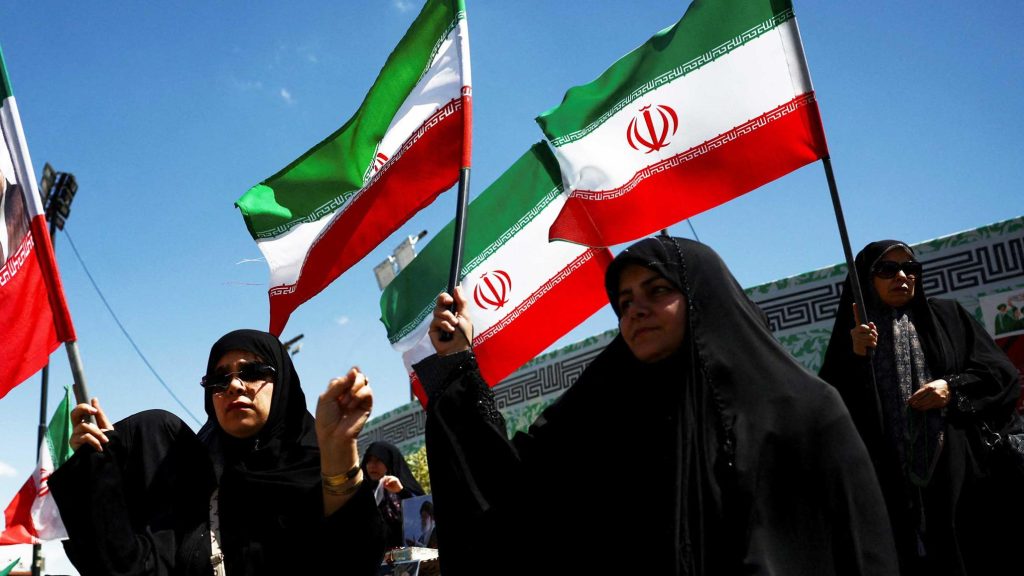
Iran-US War and Islamabad peace facilitation prompt me to recall the famous quotes of Abraham Johannes Muste, a US-based civil rights and anti-nuclear-weapons activist. To him, nothing can lead to peace, but peace, in fact, facilitates a positive change in relations therefore, not circumstances or ways, but ‘peace’ itself proves a nucleus of attention in the crisis-packed situation in a society or world. Social scientists usually count the factors and circumstances leading to peace in a conflict at the societal and international level, but A. J. Muste believes that ‘peace’ is the greatest force that attracts rival protagonists to create understanding and end conflict. A. J. Muste opposed World War I and the US-Vietnam War and also opposed nuclear weaponry. He worked zealously and nonviolently for labor rights and civil liberties in the United States. The US-Israel led war against Iran on 28 February 2026 caused a catastrophic results and the continuous bombing destroyed Iran’s civil infrastructure, and approximately 180 schoolgirls were killed in an aerial attack. It was condemned by the masses in the US and other countries. Iran closed the Strait of Hormuz as a war tactic, which created a global oil crisis, and all countries’ economies experienced an overnight major setback. The US President changed his initial war objectives and focused on the reopening of the Hormuz because multiple nations were bashing the US President for his unethical war mongering ambition, which caused the energy crisis. US President Donald Trump first decided to isolate the US from this dangerous drive and declared that the affected countries should send their troops to open this sea route for their vessels, but in April 2026, he issued a furious statement that if Iran did not open the Strait of Hormuz, it would be eliminated from the earth. It caused panic in the world because this message meant a nuclear attack on Iran. If it happened, any power could justify the use of nuclear weapons against the rival country, and the world could be an unsafe and hellish place. It could also convince every country, including Iran, to have nuclear weapons in future because having nuclear weaponry was to be left as the only option to survive against a rival nuclear power. However, Pakistan, China, Russia, Egypt, Turkey, and Saudi Arabia, enjoying cordial relations with the US and Iran, ultimately brought a truce of two weeks, and both countries consented to dialogue in Islamabad on 10 April. Army Chief Gen. Asim Munir, PM Mian Shahbaz Sharif, and Foreign Minister Ishaq Dar from Pakistan played a pivotal role in the ongoing parleys between the rival leaders. The ceasefire created an environment in which both camps claimed victory, and both seemed busy proving their military strength and muscles, but despite all, they are heading towards peace through dialogue. Threatening Statements by the US President even before a day before the negotiations is an evidence that the agreement (if it is concluded) would be presented as Iran’s surrender before the US might. A. J. Muste quotes that not circumstances, but ‘peace’ itself pushed the rival forces away from the battlefield. Once, a reporter questioned his presence as a protest in front of the White House: ” Can you change the White House? A. J. Muste replied. ‘I don’t do this to change the country. I do this so the country would not change me.’ The ruling elite always use the name of ‘state’ to change the people as it desires, but the state’s predilections change with the passage of time; therefore, to curb the citizens proves havoc for the social fabric. Dissatisfied masses can hardly produce a beneficial human resource that truly serves a nation. A. J. Must says that the problem after a war is that the victor shows the fight has brought a bright future, and war has paid the nation a lot. In their perception, the war was a new form of reform that would ensure prosperity and psychological pride for the people. Iran and the USA have both been claiming victories and asserting that the conflict has brought blessings. Both countries closed their eyes to the human sufferings and loss of innocent lives, wealth, economy, infrastructure, and hatred generated against each other. Peace proved its importance and motivated them to approach the neutral countries for a ceasefire, which means the war had crippled both the rivals to the extent that they were unable to talk even of ‘peace’, which shows the weakness and impotency of the so-called victors. A. J. Muste opines that no big power in the war accepts itself as an aggressor; instead, it is always the rival that is the aggressor.’ However, I think that every fighting country thinks of itself as a big force, therefore both become ‘big powers’ under their own justifications. Look at the arguments of the US and Iran that have been justifying their righteousness and aggression toward the rival according to their own national narratives. None of them is ready to accept any lapse on the side. Perhaps it happens amid internal and external threats to the political leadership, who twist events and arguments to secure their political position and national morale. This is another form of stress and aggression against peace, humanity, and righteousness. For example, many US military and other officials refused to attack Iran who must be consulted about their current thinking on their decision. A. J. Muste says that peace is impossible if people are only concerned with peace. A war is an outcome of different ways of life. If people desire to attack war, they have to attack that way of life.’ A. J. Muste here can be disagreed because way of life is always different, which does not mean to be in a battlefield all the time. I think he wants to say that if people dislike war, they should change their vision to one of living in societies with divergent ways of life. This quote reflects Muste’s desire that prosperity and civil liberties can change society, and by this, war maneuvering can be suffocated. AJ Must was a member of the Fellowship of Reconciliation in the US, which struggled against war hysteria and the violation of civil liberties and for labor rights. He delivered lectures in different universities on the nonviolent struggle for rights. He joined the Montgomery Bus Boycott, led by Martin Luther King, Jr., in 1955. A. J. Muste’s struggle is still admired by Americans and Europeans because he worked selflessly for humanity, peace, and the dignity of all races.
Writer is a US-based Historian & Colmunist
9 April 2026